Friday, 20 February 2015

Thursday, 19 February 2015
Tango Film: dance with me (Tango Scene)
Non ovunque esistono scuole di questo tipo, ma quello che é bene
osservare é come film scripters and scenic directors ask to dancers
Tango Film - scene from "Love And Other Disasters"
Let's try to see what film directors and filmscripters ask in Tango story.
Thi is one of the example of simple scenography and basic coreography.
Thi is one of the example of simple scenography and basic coreography.
Tuesday, 17 February 2015
Vi proponiamo questo clip da provare per una sera speciale - Vi propose this tango to test for a special night
Si, va bene, non é cosí semplice da ripetere, ma questo
dovrebbe essere il target finale di un corso specifico:
mettere in condizione gli allievi di fare questo!
Monday, 16 February 2015
Something new...Qualcosa di nuovo...
Questa sera vogliamo darvi uno spunto in più per capire bene un meccanismo fisico-ginnico che può aiutare moltissimo durante le fasi dell'insegnamento: la inspirazione e la espirazione. Come in tutti gli esercizi fisici, anche nel Tango si può utilizzare le due fasi ventilatorie della respirazione, come fosse un metronomo e così seguire meglio la musica e i passi.
Osservate questo diagramma fatto a mano da un amico insegnate in America. I 4 tempi del Tango hanno un ritmo al quale devono corrispondere determinati passi. Il ritmo deve seguire un periodo completo che è composto di due fasi a 4 tempi. Durante la esecuzione di queste due fasi si dovrebbe avere una iniziale inspirazione, seguita da una pausa breve e da una espirazione. In pratica, durante la fase di inspirazione si devono avere 4 passi che seguono la prima fase e altri 4 passi che seguono l la seconda con la espirazione. Come un normale esercizio di sollevamento di un peso: la fase completa è il sollevamento, la pausa e il riporto del peso alla fase iniziale e poi pausa; questo vuol dire che durante il sollevamento ci sarà una espirazione, una pausa e una inspirazione durante il ritorno del peso allo stato iniziale. Provate, vedrete che effetto otterrete con gli allievi!
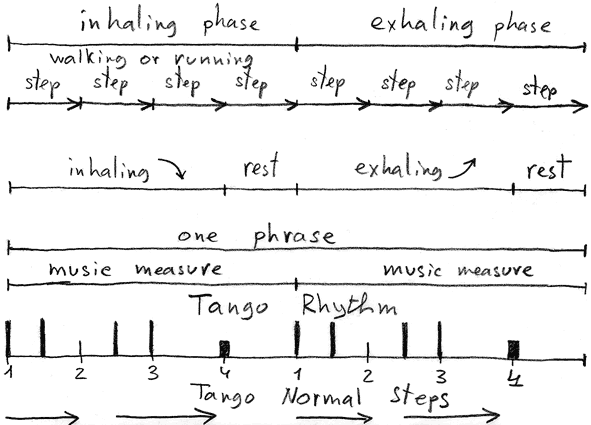
This evening we want to give you one more opportunity to understand a physical mechanism-gymnastic that can help tremendously during the phases of study: the inhalation and exhalation. As in all physical exercises, even in Tango you can use the two phases ventilatory breathing, like a metronome, and so better follow the music and steps.
Look at this diagram handmade by a friend teacher in America. The four times of Tango have a rate at which it certain steps must match. The rhythm must follow a complete period that is composed of two phases of 4 times. During the execution of these two phases should have an initial inhalation, followed by a brief pause and than exhalation. In practice, during the inspiratory phase must have 4 steps that follow the first stage and 4 more steps that follow the second with the exhalation. As a regular exercise lifting a weight: the complete phase is lifting, pause and carry weight in the initial stage and then break; this means that during the lift there will be an exalation, pause and inhalation during the return of the weight to the initial state. Try it, you will see what effect you will get with the students!
Saturday, 14 February 2015
A present for you all
Oggi è san valentino e allora abbiamo deciso di fare un regalo a chi sa leggere la musica, inviando qualche spartito. Così, come presente per la giornata odierna colorata di rosso!
Today is Valentine, and then we decided to make a gift to those who can read music, sending some score. So, as present for the day of today colored in red!


Today is Valentine, and then we decided to make a gift to those who can read music, sending some score. So, as present for the day of today colored in red!
Sunday, 8 February 2015
Program of steps for Tango (3)

Tango
Advanced Level Step
1.
Spontaneous
variations of the steps – staccado and legado movements
2.
Precision
of the posture and frame
3.
Refinement
of the colgada
4.
Enganche
5.
Planeo
6.
Enrosque
7.
Calesita
8.
Volcada
9.
Refinement
of the close embrace
10.
Giro
(under close embrace)
11.
Syncopation
12.
Variation
of the parade
13.
Variation
of the boleo
14.
Variation
of the barrida
15.
Variation
of the ocho (revolving forward and back ochos)
16.
Variation
of the sacada
17.
Variation
of the colgada
18.
Follower’s
conversation: resisting/releasing movement, using momentum, slowing/speeding
things down
19.
Complex
and refined embellishments
Program of steps for Tango (2)

Tango
Intermediate Level Steps
1.
Creativity
on the floor
2.
Use
of the follower’s free leg
3.
Close
embrace
4.
Transition
between open and close embrace
5.
Corrected
posture positions (body, arms, elbows, legs…)
6.
Molinette
7.
Giro
in the open embrace
8.
Boleo-back
and forward
9.
Media Luna
10.
Refinements
of embellishments
11.
Barrida
12.
Sacada
13.
Ocho
cortado
14.
Variations
of the ocho (with barrida)
15.
Parada
16.
Vals
17.
Milonga
18.
Gancho
19.
Sanduchito
20.
Carpa
21.
Basic
colgada
Following requests from friends and dancers, we repeat -in different posts- what theoretically could be the program of steps for Tango (1)

Tango
Beginner Level Steps
1.
Forward
step
2.
Back
step
3.
Side
step
4.
Rok
step
5.
Walking
step
6.
Walking
with turn
7.
Soft
knees
8.
Concept
of leading
9.
Concept
of following
10.
Requesting
and accepting a dance
11.
Lead’s
floor craft (collision avoidance, line of dance, etc)
12.
Open
embrace
13.
Balance
14.
Axis
15.
Anticipation
16.
Rhythm
17.
Beat
18.
Posture
and frame
19.
Connection
with partner
20.
Weight
changes in place
21.
Ocho,
front and back
22.
Parallel
and cross system
23.
Cruzada
24.
Simple
embellishments (eg tap)
Friday, 6 February 2015

Wednesday, 4 February 2015
Tango e Flamenco sono nel Patrimonio della Umanita'
...come generatori di uno stile di danza e di comunicazione unico nella
storia dello sviluppo artistico di un popolo e della costruzione di una
personalitá. Qui vedete la leggendaria Carmen Amaya, prima donna ad
aver spopolato i teatri di tutto il mondo con le sue nacchere e il suo stile
unico nella storia della danza in generale.
FLor de MONSERRET - Una splendida coreografia basata sul Canyengue!
Vi suggeriamo di visualizzare attentamente i movimenti dei due ballerini!
Subscribe to:
Posts (Atom)